Westside Chiropractic
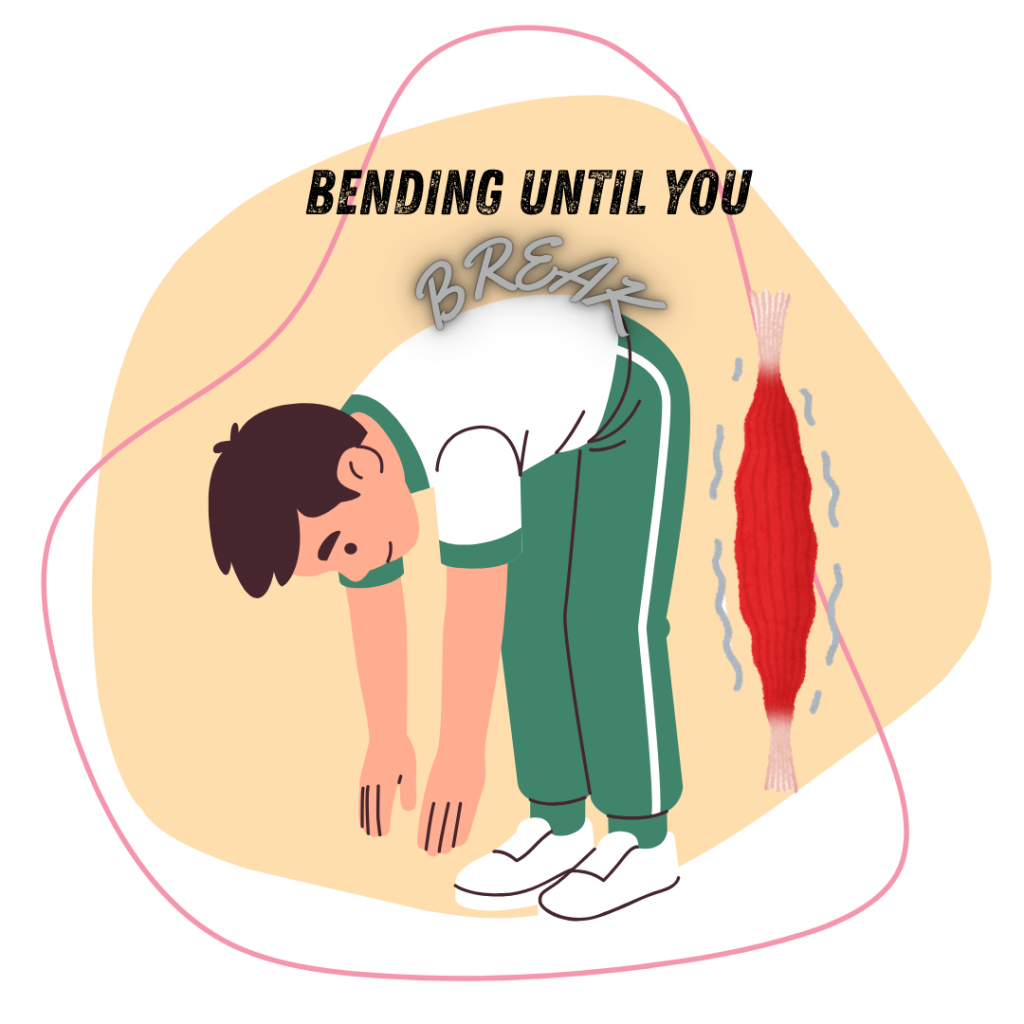
Whether you had Barbie dolls or G.I. Joe action figures (they aren’t dolls… obviously), both were toys that move, bend, but eventually get bent to bits. This deformation is due to the physical ability of materials to deform under stress. An elastic deformation has a force applied and is able to return to its original shape. A plastic deformation, on the other hand, undergoes force but never fully returns back to its normal state. Like our toys, sometimes we can get all bent out of shape.
Muscles are amazing at retaining their elastic potential under stress. Due to the anatomy of how the motor tissues run alongside one another, a healthy muscle can be loaded and stretched with relative ease. This is until, we meet a load or stretch that is too much
Even if we talk about a rubber band, all materials have an elastic limit. This threshold gets crossed and causes the material to deform or break entirely. The elastic limit for a muscle changes for many factors from person to person. Two of the prime factors are the muscles ability to adapt to stresses and loads. For example, a semi-regular gym goer who lifts weights will have muscles that have a higher elastic limit than someone who doesn’t lift at all. This means that when an increased amount of weight is loaded on them, someone who is used to resistance exercise will have a lower risk of damage to the muscle.
On the other hand, someone who practises yoga will have muscle fibers that have a better access to tensile stretching forces. If you take the weightlifter from the previous example and try to get them to do advanced yoga positions, they may not be flexible enough to get to the poses. This is because they have trained their body to be able to contract under force but not under stretch. This may also cause more tearing along their muscles compared to someone who is flexible and feel delayed onset muscle soreness after the yoga class.
Similar to the threshold in muscles, your cartilage can bend and break with forces. Disc herniations are caused by the cartilage tissues in between the vertebrae wearing with time and stress. This is most often with repetitive bending but can also occur from any excessive force placed through the spine. This is why having proper biomechanics in everyday activities can make such a difference to your back pain. A controlled spine posture significantly reduces the force through the cartilage and causes less stress on the muscles that support the spine.
Just remember:
- Reduce your risk of overload injury with strengthening
- Reduce your risk of straining injury with stretching
- Reduce your risk of disc herniation and back spasm with posture
Happy bending reduces breaking,
Dr. Cole Maranger DC