Westside Chiropractic
We are all too familiar with the sensation of pain. Whether it’s a dull ache, burn, sting, zing, or discomfort, pain can be experienced all across our body. Sometimes pain is obvious, such as when we stub a toe or fall on an outstretched arm. Other pains can be confusing and last longer than what we think they should last.
Pain is experienced based on the brain’s connection to the receptors that are located in the skin, muscles, tendons, and ligaments, and fascia (connective tissue). When the skin is cut or a joint is sprained, the receptors send signals to the brain to let it know that something has gone wrong and in what location the issue has happened. Signals are either sent by a fast A fibers or a much slower C fiber
When the pain continues for a long time, the brain creates new networks to make those signals alert the brain sooner. This is a cause of persistent pain that lingers past a natural history of an injury. Those pain networks also become quicker to respond as the pain threshold for an injury becomes lower.
This theory of pain and injury can be visualized by the image below. The first triangle shows a normal pain threshold that is very high and the tissue threshold which is even higher. This means that the tissues in our body can withstand most of our day to day activity without feeling any pain or discomfort. After an injury occurs to our tissue, the tissues can become more sensitive and change their thresholds. The tissue threshold lowers because your body guards the injured site and the receptors become more sensitive to change which heightens the pain we feel. This means that a normal day to day activity or a smaller force on the body will trigger our brain to send pain signals even if it doesn’t hurt us.
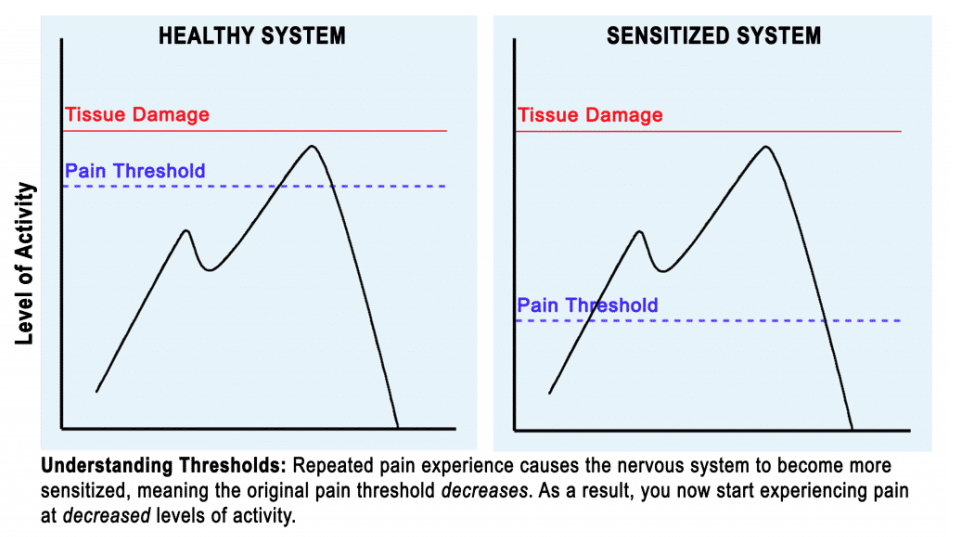
To heal the injury and get back to a more “normal” pain threshold, we have to temporarily reduce the demands we put on our tissues and allow for more breaks through the day. This will allow us to have a higher tissue threshold because the muscles/ligaments/tendons won’t be as tired by the end of the day.
Stay tuned for the next article when we take a look at persistent pain
Stay rested, but stay moving,
Dr. Cole Maranger