Westside Chiropractic
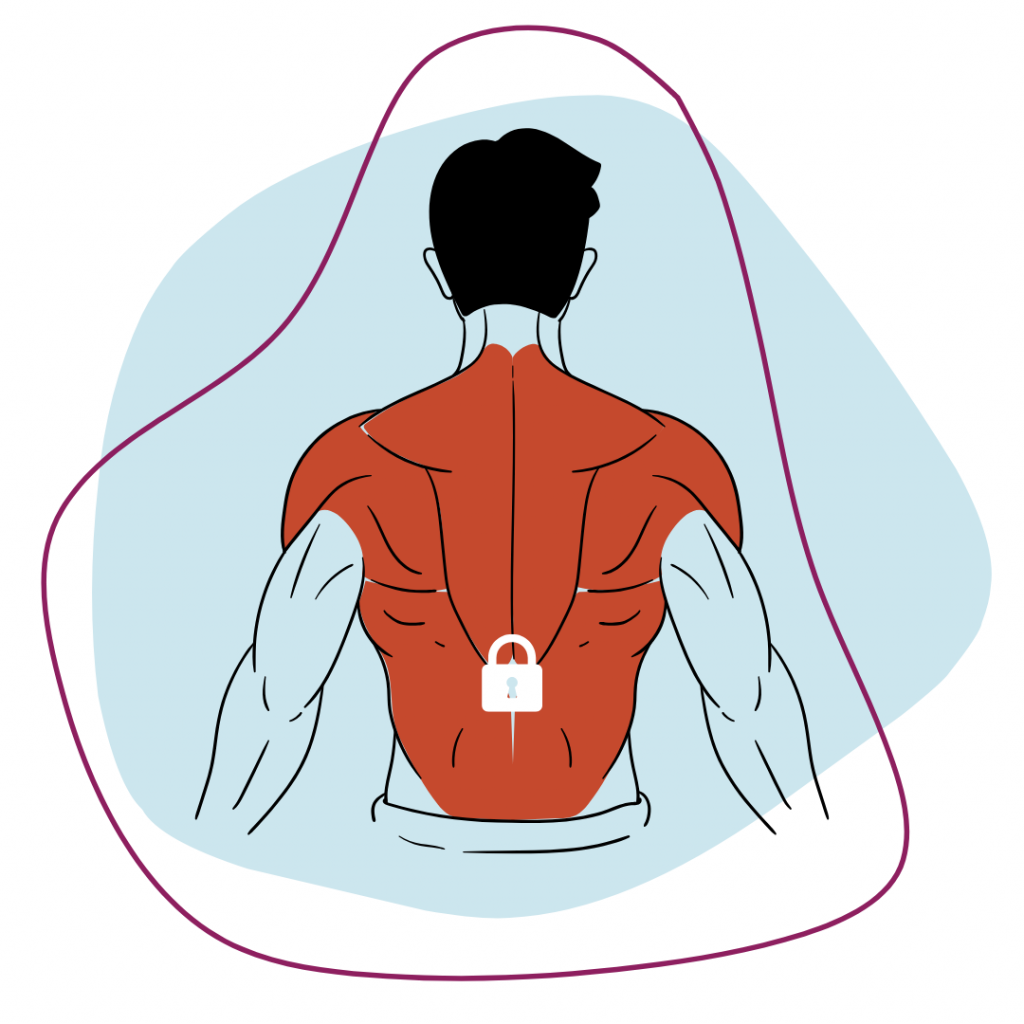
On any normal day, patients come to the clinic with achy and stiff backs, necks, and joints. When I get them on the table, the muscles are all tensed up and parts of the back just don’t want to move… but which of those comes first? Does a joint get stiff or lock up and cause the muscles to guard, or do muscles tighten up and restrict the normal movements of the joints? This is the classic dilemma of the chicken or the egg that we’ll figure out.
First, let’s talk about muscles. When muscles become strained or fatigued, the natural response from the brain is to contract and hold that muscle (or group of muscles) in a strong position. This strong position is typically shortened to half of its maximal contraction length which is actually a position that uses less energy to hold. This is because half of the muscle contraction uses the thickest part of the muscle belly which has the most muscle fibres
When a joint locks up, there is increased tension in the joint fluid (called synovial fluid) which can lead to pain, stiffness, and decreased range of motion. The muscles that attach to that joint then feel like they have to protect it because it’s not moving or causing pain. The only way that muscles protect is to contract and hold position as we saw above. The other problem is that one joint gets restricted, often the joints above and below it tend to overcompensate and become unstable themselves, potentially causing even more pain and discomfort.
So the question is joint restriction causing the muscle tightness or is muscle tightness pulling on the joints and causing restriction is yes. Sometimes one causes the other and vice versa. If there is an obvious cause of the chief complaint like an improper lift or a lift that’s too heavy – it’s most likely a muscle strain that caused joint tightness. Otherwise, the muscles, bones, nerves, and joints are so interconnected that working on both the muscles and joints is the best solution.
If you have any difficulty or pain with movement, it’s always best to have a professional look at it and see what the issue is. Most of the time, a mix of hands on care and exercise is one of the best fixes for mechanical back or neck pains.
Happy muscles, happy joints,
Dr. Cole Maranger